How to evaluate a momo business opportunity
A no-hype framework for testing demand, contribution, capacity, compliance and contract risk before paying for equipment, premises or a franchise.
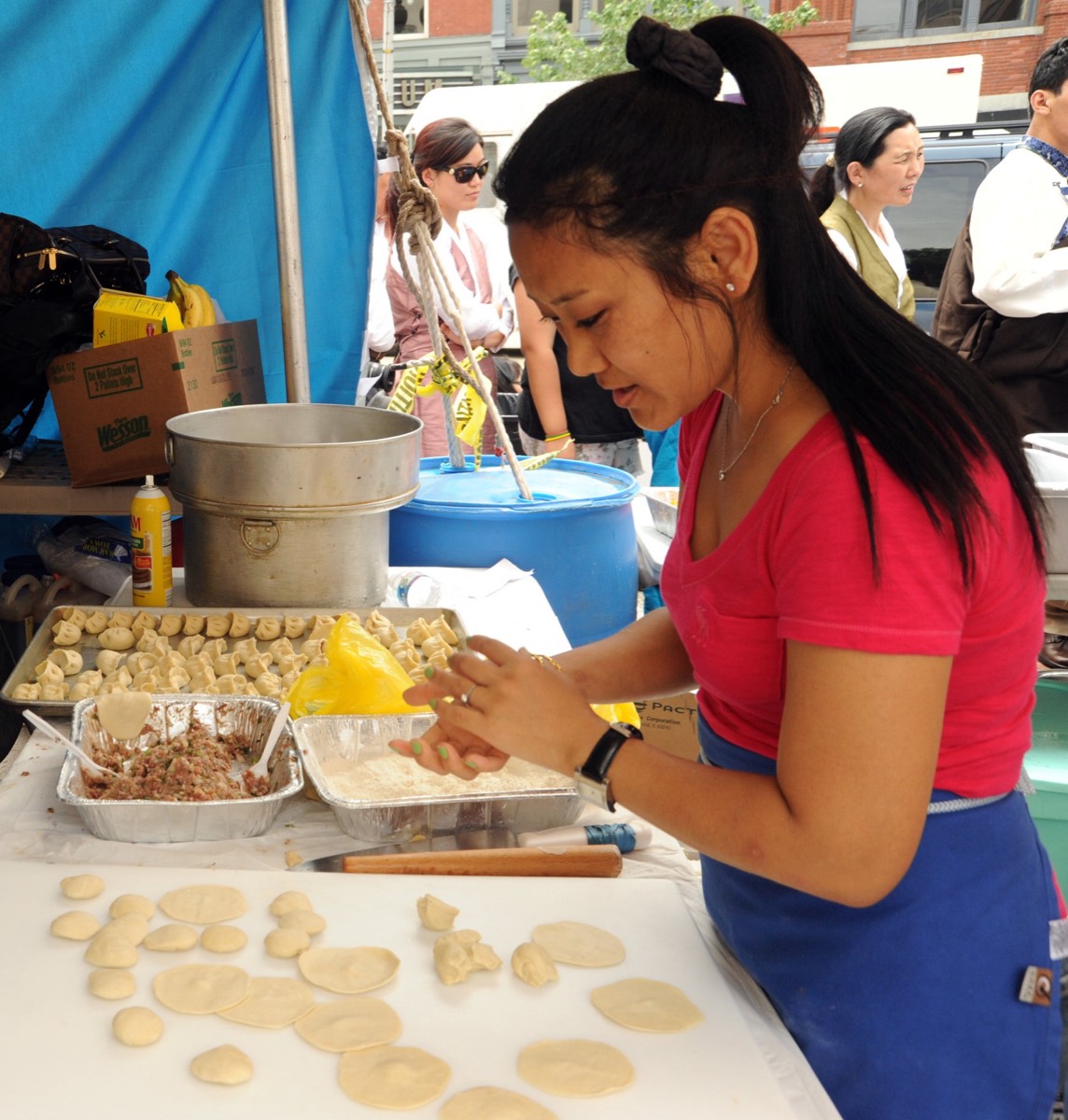
Start with a testable operating model, not a logo
A momo concept can run as a home-delivery kitchen where lawful, a market stall, a mobile cart, a takeaway kiosk, a café counter or a full restaurant. These formats do not share the same rent, equipment, permissions or service speed. Choosing the format first keeps the rest of the plan coherent.
The first question is not “How much does a franchise cost?” It is “Can this menu be produced safely, consistently and profitably at the expected order volume?” A useful pilot tests demand, batch capacity, labour minutes, food cost, waste, queue time and repeat purchase before a long lease or brand fee is considered.
Compare operating formats
| Format | Main advantage | Primary constraint | Best first test |
|---|---|---|---|
| Delivery kitchen | Lower customer-area fit-out | Packaging, platform fees and travel quality | Timed delivery radius test with separated sauces |
| Market stall | Direct footfall during events | Event schedule, utilities and temporary permissions | One legal event with a deliberately small menu |
| Mobile cart | Compact footprint and visible steaming | Pitch rights, water, waste and weather | Approved fixed pitch before assuming daily mobility |
| Takeaway kiosk | Repeatable location and fast handoff | Rent and peak-hour queue design | Count relevant footfall and competitor queues by time block |
| Café or restaurant | Broader experience and higher basket options | Fit-out, staffing and menu complexity | Pop-up proof before signing a full-site commitment |
These are structural comparisons, not promises. A cart in a weak pitch can cost more per order than a kiosk in a dense catchment. A delivery kitchen can appear cheap until packaging failures, discounts and marketplace commissions are included. Measure the whole order, not one attractive expense line.
Build a unit-economics worksheet
Unit economics describe what remains from an average order after the costs that move with that order. Begin with net selling price after discounts and taxes where applicable. Subtract food ingredients, chutney, oil, packaging, marketplace commission, payment fee and a realistic waste allowance. The result is contribution per order before fixed expenses such as rent, salaried labour, insurance, licences, maintenance and financing.
| Input | How to measure it | Common blind spot |
|---|---|---|
| Net order revenue | Actual receipts after discounts and refunds | Using menu price instead of collected revenue |
| Ingredient cost | Recipe quantity × current purchase cost | Ignoring oil absorption, chutney and garnish |
| Packaging | Box, dip cup, bag, tissue and label | Counting only the main container |
| Variable selling fee | Commission and payment charge per channel | Blending direct and marketplace orders |
| Waste | Discarded prep and unsold finished product | Assuming theoretical yield equals saleable yield |
| Labour minutes | Hands-on minutes by batch and service stage | Treating owner time as permanently free |
Use scenarios rather than a single optimistic forecast. A base case uses observed pilot demand, a downside case lowers orders and raises waste, and a capacity case tests what happens when the steamer or pleating station becomes the bottleneck. If the downside case cannot carry fixed commitments, reduce the commitment before trying to “market harder.”
Due diligence before paying a franchise or licence fee
- Identify the legal counterparty. Verify the company or proprietor, trademark claim, contract party and authority to offer the territory.
- Read the complete agreement. Map upfront fees, recurring royalty, marketing contribution, mandatory suppliers, renewal, transfer, termination and post-term restrictions.
- Validate economics independently. Ask for the assumptions behind sales, food cost, labour, rent and break-even claims; then rebuild the model with local quotes.
- Speak with multiple current and former operators. Ask about opening delays, stock availability, training usefulness, hidden capex, support response and actual closure reasons.
- Test the product and process. Observe a full preparation and service cycle, not only a tasting plate. Check whether the process fits the promised staffing and footprint.
- Use qualified local advice. A lawyer should review the contract; an accountant should test the economics; the local authority or food-safety professional should confirm permissions.
A polished presentation is not evidence of earnings. A reliable opportunity should survive document review, operator references, local cost quotes and a downside scenario. Refusal to share the full agreement, pressure to pay immediately, guaranteed-return language or unexplained supplier margins are reasons to pause.
Design the production flow before buying equipment
The product moves through receiving, cold storage, washing, cutting, mixing, dough preparation, portioning, filling, pleating, cooking, saucing, packing and handoff. Sketch those stages in order. Raw meat should not travel back across ready-to-eat chutney or cooked-food space. Handwashing, potable water, drainage, cleaning chemicals and waste removal need physical locations, not just checklist mentions.
Capacity is determined by the slowest stage. A larger steamer does not help if two people cannot pleat enough dumplings before the rush. Likewise, a fast pleating station creates unsafe pressure if chilled holding and batch identification are missing. Time each stage during a pilot and calculate sustainable output, including cleaning and changeover.
Standard operating procedures should cover recipe weights, allergen controls, opening checks, receiving, temperature checks, cleaning, oil management, batch labelling, complaint handling and closing discard. Train against observed actions rather than asking staff to sign a document they cannot demonstrate.
Compliance and food-safety checkpoint
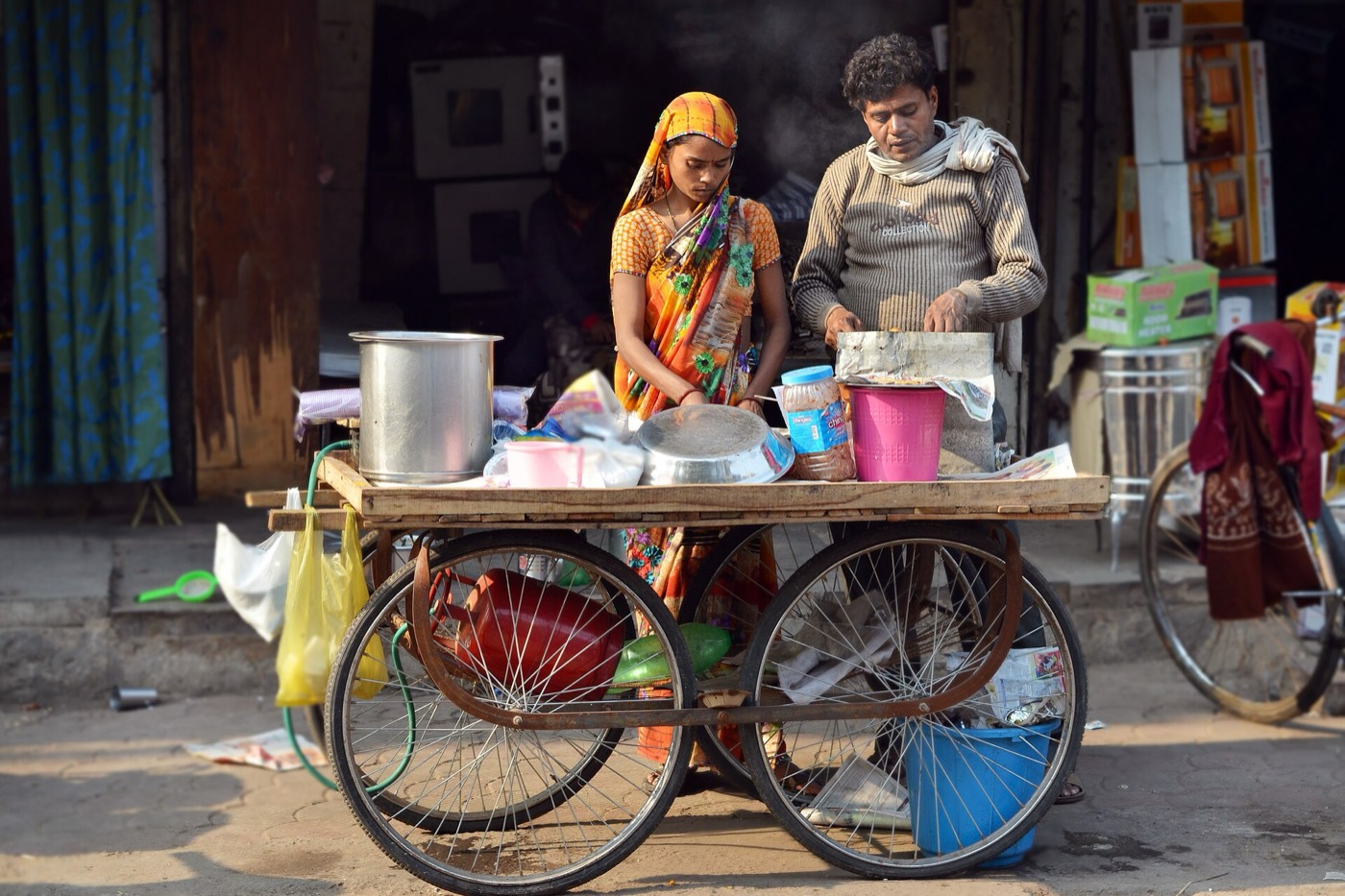
In India, food-business registration and licensing are handled through FSSAI’s Food Safety Compliance System, FoSCoS. The official eligibility surface includes petty retailers, hawkers, itinerant vendors and temporary or fixed stalls, but the correct category depends on the actual activity, scale and location. Municipal vending permission, landowner permission, fire, trade, waste, gas and local establishment rules may also apply. Verify them before trading; one registration does not automatically replace every other permission.
Use the WHO Five Keys to Safer Food as a baseline for operating design: keep clean, separate raw and cooked, cook thoroughly, keep food at safe temperatures, and use safe water and raw materials. Convert each principle into a visible control: separate boards and utensils, labelled cold storage, a thermometer and record, handwashing supplies, protected chutney, scheduled sanitation and a closing waste rule.
A go / revise / stop scorecard
| Dimension | Go | Revise | Stop |
|---|---|---|---|
| Demand | Paid pilot shows repeatable orders | Interest but weak conversion | Forecast relies only on generic popularity |
| Contribution | Positive under base and credible downside | Positive only after process changes | Depends on permanent owner-free labour |
| Capacity | Bottleneck measured with quality intact | Rush creates delays but can be redesigned | Safe handling fails at target volume |
| Compliance | Required approvals mapped and obtainable | Clarification or site change needed | Proposed pitch or process cannot be authorised |
| Agreement | Rights, costs and exit terms independently reviewed | Negotiable ambiguities remain | Missing documents or guaranteed returns |
The goal is not to force every idea into “go.” A revise decision can protect capital while preserving the useful parts of the concept. A stop decision is valuable when it arrives before a lease, equipment finance or non-refundable fee.
For a lower-commitment test, use the food-cart planning guide. For product simplification, compare preparation stages in the momo styles guide.
Official sources and scope
- FSSAI FoSCoS eligibility criteria — food-business categories and the current eligibility interface.
- FSSAI licensing and registration regulations compendium — registration and hygiene framework.
- WHO Five Keys to Safer Food — general operational food-safety principles.
This is educational planning content, not a franchise offer, earnings claim, legal opinion or food-safety certification. Obtain local professional advice for a real investment.